
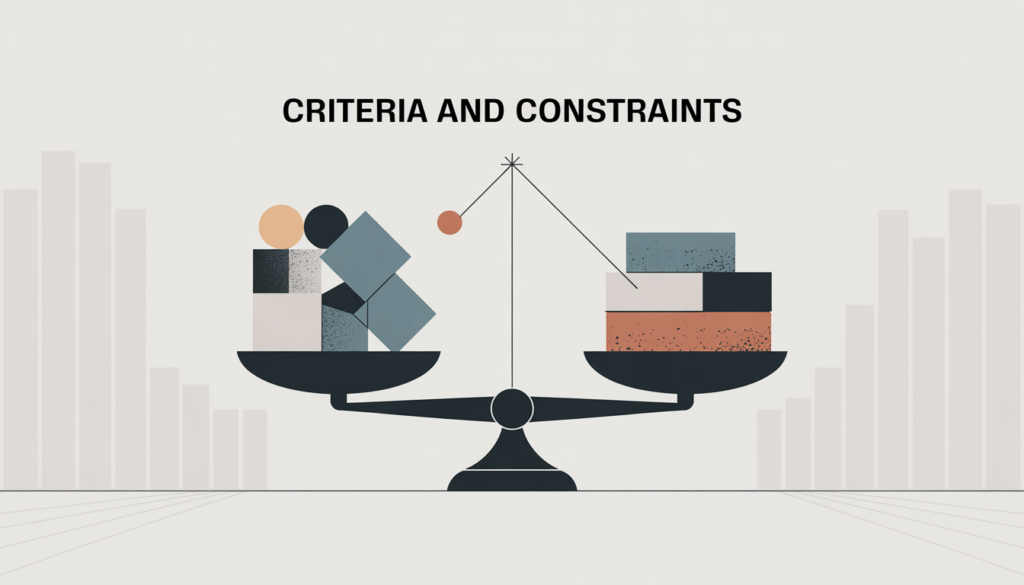
When starting a design project, two important things guide the way: criteria and constraints. Criteria are the project requirements or goals that the design must meet to be successful. They help decide how well the design will be judged.
Constraints, on the other hand, are the limits and rules that the design must follow. These can be time, budget, resources, technical limits, or other factors. They set the boundaries of what can be done.
Criteria and constraints are key in guiding the design process. They help designers and engineers stay focused and make smart choices. This ensures the design is not only good but also possible to make within the given limits.
By setting clear criteria and constraints from the start, teams can prevent scope creep and manage expectations. This way, they can create designs that meet the project’s goals. In the next parts, we’ll explore more about criteria and constraints and how they influence the design process.
Understanding Criteria and Constraints
Starting any design project means setting clear rules from the start. These rules help define what the project can do and if it’s possible. They make sure the final product meets the client’s needs and hopes.
Criteria are the base for a good design. They tell what the project needs to do. By knowing these criteria, designers and engineers can make smart choices. They always keep the project’s goal in mind.
Criteria also help check if the final product is up to standard. This makes sure it meets the required quality and goals.
Constraints, on the other hand, are the real limits of the design. These can be things like budget, time, materials, and what technology allows. At first, these limits might seem like a problem. But they actually help designers be creative and find new ways to solve problems.
Finding the right mix between criteria and constraints is tricky. It’s about balancing what’s best and what’s possible. When done right, designers can make products that are both what the client wants and something new and useful.
Types of Criteria in Design
When designing a product, several key criteria must be considered for success. These criteria are divided into three main areas: functional, aesthetic, and performance.
Functional criteria look at how well a product does its job. For instance, a wind-proof umbrella needs to stand strong winds without breaking. It should also be easy to use, even in bad weather.
Aesthetic criteria focus on how the product looks. For a wind-proof umbrella, designers think about color, pattern, and shape. They aim to make a design that’s both useful and pleasing to look at.
Performance criteria deal with the product’s durability. For an umbrella, this means using strong yet light materials. This ensures the umbrella lasts a long time and is reliable.
By focusing on these criteria – functional, aesthetic, and performance – designers can make products that meet user needs and expectations.
Different Types of Constraints
Engineers face many constraints when designing products. These limits shape the final design. Understanding these constraints helps designers meet user needs and market demands.
Budget is a big constraint. Every project has financial limits that affect material choices and more. Designers must find ways to get the most value within these limits. This can mean choosing cost-effective alternatives or streamlining production.
Technical constraints are also key. They depend on current technology and resources. For example, making a wind-proof umbrella requires materials that are both light and strong. Designers must work with engineers to find solutions that are both innovative and realistic.
Regulatory constraints are about following safety rules and legal guidelines. These ensure products are safe and meet standards. Designers must keep up with changing standards and add necessary features, like child-proof locks or fire-resistant materials.
By considering budget, technical, and regulatory constraints, designers can create products that meet needs. Seeing constraints as challenges can lead to innovative solutions that balance form, function, and feasibility.
The Role of Stakeholders in Defining Criteria
Engaging stakeholders is key in design projects. Simply Stakeholders says stakeholders have needs and expectations for projects. These can be clear or assumed.
To get stakeholder needs, designers need to find key stakeholders. They should plan how to engage them, get their input, and document it. Keeping stakeholders happy is also important.
Stakeholders offer different views based on their roles and backgrounds. Including them in design criteria helps designers. It leads to better designs that meet everyone’s needs.
Tools like stakeholder registers help manage needs. By balancing these, designers can make high-quality solutions. These solutions are valuable and meet project goals.
Balancing Criteria and Constraints
Successful engineering design is about finding the right mix of criteria and constraints. Criteria set the goals of a project, while constraints are the limits designers must follow. Finding this balance is crucial for creating the best solutions.
Engineers often have to make choices when meeting criteria and constraints. For instance, a baby gate that’s very sturdy might be heavy and hard to carry. On the other hand, a hands-free mechanism might be harder to use than a simple latch. Designers must carefully decide how to balance these needs.
To find the right balance, engineers must prioritize what’s most important. They work closely with stakeholders to understand their needs. This way, they can make smart choices about where to compromise and where to focus more effort.
The aim is to create a design that fulfills key criteria within the given constraints. This demands creativity, problem-solving, and a readiness to improve the design. By overcoming this challenge, engineers can provide solutions that work well and are practical.
The Impact of Criteria on Design Quality
Criteria are key to making sure design solutions are top-notch. They help designers create products that users need and want. These criteria cover important areas like how well something works, how easy it is to use, and how it looks.
Good criteria act as a guide for checking design solutions. They help engineers see what’s working well and what needs work. This way, designers can make their designs better.
Criteria also make sure designs are good for society and the environment. They consider things like how a product affects the planet, keeps users safe, and fits in with different cultures. This way, designs meet more than just basic needs.
Also, clear criteria help designers understand what users and the market want. By listening to user feedback and doing market research, designers can make products that people want to buy and use.
In short, criteria are very important for design quality. By following key guidelines, designers can make products that are not just useful but also meaningful and valuable to users.
Tools for Managing Criteria and Constraints
Managing project requirements well is key to good design outcomes. Engineers have many tools to help track and follow criteria and constraints. These tools make the design process smoother.
Advanced design software lets teams work together easily. It keeps everyone on the same page from the start. These platforms are great for organizing and prioritizing project needs.
Modern design software also has strong simulation tools. Engineers can test their designs against project needs quickly. This helps spot problems early and solve them fast.
Rapid prototyping tools are also very useful. They let teams test their designs in real or virtual ways. This makes it easier to make changes and get the design right.
Using these tools, engineers can make their design work better. They improve teamwork and deliver top-notch solutions. These solutions meet project needs exactly and efficiently.
Case Studies of Criteria and Constraints
Real-world examples show how balancing criteria and constraints leads to great designs. For instance, the iPhone’s design had to be sleek and meet strict technical standards. It had to fit within tight size limits. Apple’s designers managed to create a groundbreaking smartphone that changed the game.
On the other hand, the Tacoma Narrows Bridge collapse in 1940 shows what happens when you ignore design constraints. The engineers didn’t fully consider the materials’ limitations and wind effects. This led to a tragic failure. It’s a harsh lesson on the importance of understanding and addressing constraints in design.
The Mars Curiosity Rover and energy-efficient buildings are other examples. They had to work in harsh environments and meet strict standards. By studying these cases, designers can learn how to handle the complex balance of criteria and constraints. This is key to creating solutions that are innovative, practical, and meet the needs of stakeholders and end-users.
Innovation Within Constraints
Designers often see criteria and constraints as limits. But these boundaries can spark creativity and innovation. When faced with tight budgets, strict safety rules, or limited materials, designers must think creatively.
Constraints push designers to question their assumptions and explore new ways. They find clever solutions to meet project needs. This leads to innovative designs.
For example, the need for cost-effective manufacturing has led to new methods. Designers have to cut costs without sacrificing quality. This has driven advancements in materials science.
They’ve created lightweight, strong composites that are cheaper than traditional materials. New assembly techniques have also made production more efficient and reduced waste.
Safety regulations have also driven innovation. Strict safety standards for vehicles, medical devices, and products have pushed designers to create new protective features. These innovations improve safety and user experience.
By accepting the challenges of criteria and constraints, designers can unleash their creativity. These limits focus their efforts and encourage fresh thinking. The most groundbreaking designs often come from working within these boundaries.
Evaluating Design Against Criteria and Constraints
As engineers move through the design process, they must always check their work. This ensures the final product meets all the goals set. It’s about performance, functionality, and how users will feel about it.
Testing prototypes is a big part of this check. Engineers test the design to see if it works as planned. This testing often shows areas that need improvement.
User feedback is also key. By listening to what users say, designers can see if their design meets needs. This feedback helps make the design better for users.
It’s important to keep looking at the original criteria and constraints. This keeps everyone on track and makes sure changes are okay. Regular checks help catch and fix problems early, saving time and money.
Future Trends in Design Criteria and Constraints
Technology keeps getting better, and so do our values. Designers now focus more on making things that are good for the planet. They want to use resources wisely and reduce harm to the environment. This change comes from people wanting to live more sustainably.
New tech like AI, 3D printing, and special materials open up new design possibilities. But, these new tools also bring challenges. Designers need to learn new skills and change how they work.
More people want things made just for them. This means products that fit their unique tastes and needs. Designers face a big task: making things that are both flexible and affordable.
Designers must think about the world as a whole too. They need to understand different cultures and values. Working together with people from various places will help create solutions that work everywhere.
The future of design will mix technology, society, and the environment. Designers who can keep up with these changes will make a big difference. They’ll create solutions that are both innovative and impactful.
The Importance of Criteria and Constraints in Design
In engineering design, criteria and constraints are key. They guide the creation of effective solutions. Engineers define what the design should do and what it can’t do. This helps them focus on making designs that meet user needs and are feasible.
Criteria and constraints help evaluate and improve design ideas. They make sure the final design is not just functional but also useful and valuable. Engineers use these factors to make smart choices that balance new ideas with what’s possible.
The art of engineering is about being creative within limits. By seeing criteria and constraints as chances for innovation, engineers can create amazing solutions. As engineering keeps growing, managing these factors will become even more crucial. This will lead to even more impressive and impactful designs.


