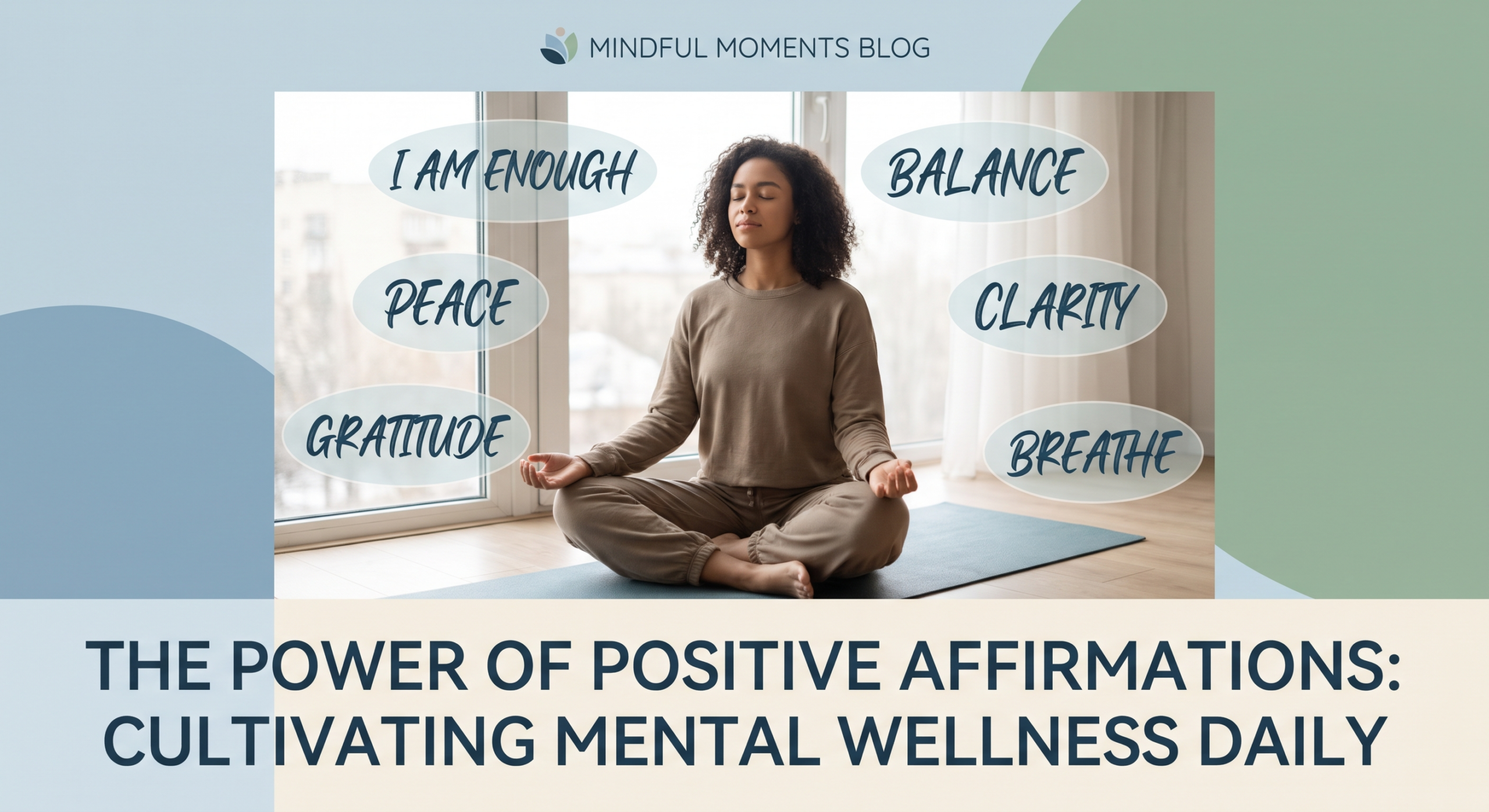
The words you speak to yourself every day shape who you become. Positive affirmations — intentional, uplifting statements repeated with belief and intention — are more than motivational buzzwords. Backed by neuroscience and positive psychology research, these simple practices have measurable effects on brain structure, emotional resilience, and life outcomes. Whether you’re skeptical or curious, understanding the science behind self-talk may change how you approach your inner dialogue forever.
What Are Positive Affirmations and How Do They Work?
Positive affirmations are present-tense statements that reflect who you want to be or how you want to feel. Examples include “I am capable of handling challenges” or “I deserve love and happiness.” Unlike wishful thinking, effective affirmations are grounded in genuine values and repeated with conscious attention.
The Neuroscience of Self-Talk
Research in neuroplasticity — the brain’s ability to reorganize itself by forming new neural connections — shows that repeated thought patterns literally reshape brain structure. When you consistently affirm positive beliefs, you strengthen the neural pathways associated with those beliefs, making them your default response over time. This process, known as self-affirmation theory, was developed by social psychologist Claude Steele and has been validated in hundreds of studies since.
The Role of the Default Mode Network
Your brain’s default mode network (DMN) — active during self-referential thinking, daydreaming, and mind-wandering — plays a central role in how affirmations work. Studies using fMRI imaging show that self-affirmation activates the DMN and the ventromedial prefrontal cortex, regions associated with self-processing and reward. This activation helps buffer against stress and threat, creating psychological safety that enables behavior change.
The Psychological Benefits of Daily Affirmations
The benefits of positive affirmations extend across multiple dimensions of mental health and performance:
Reduced Stress and Cortisol Levels
A landmark study published in PLOS ONE found that self-affirmation reduced cortisol responses to stress in participants. When people affirmed their core values before stressful events, their bodies responded with lower cortisol spikes, protecting against the chronic stress that undermines physical and mental health over time.
Improved Academic and Professional Performance
Research from Stanford University demonstrated that brief self-affirmation exercises improved GPA outcomes for students from underrepresented groups by narrowing the achievement gap. In professional settings, affirmations help counteract imposter syndrome and performance anxiety, enabling people to access their full capabilities under pressure.
Greater Openness to Feedback
When people feel psychologically secure — supported by positive self-concept — they’re more open to critical feedback and less defensive. This psychological safety accelerates learning and growth, making affirmations a productivity tool as much as a wellness practice.
How to Create Effective Positive Affirmations
Not all affirmations are equally effective. Generic statements like “I am successful” often feel hollow, especially when evidence to the contrary is strong. Effective affirmations share several key characteristics.
Anchor to Core Values
The most powerful affirmations connect to what genuinely matters to you. Before writing affirmations, identify your top 3–5 core values: family, creativity, health, integrity, growth. Then create affirmations that reflect those values. “I am growing more patient with my children every day” hits differently than “I am a good parent.”
Use Present Tense and Specific Language
The brain responds more strongly to specific, present-tense statements than to vague future aspirations. “I handle setbacks with calm and curiosity” is more effective than “Someday I will be more resilient.” Present tense signals to your nervous system that the desired state is achievable now, not contingent on future circumstances.
Keep Them Believable
If an affirmation triggers an immediate “That’s ridiculous” response, it won’t land. For deeply held negative beliefs, use process-based affirmations: “I am learning to trust myself” rather than “I trust myself completely.” As evidence accumulates, you can strengthen the statement.
| Affirmation Type | Example | Best For | Effectiveness |
|---|---|---|---|
| Value-based | “I act with integrity in all I do” | Character development | Very high |
| Process-based | “I am learning to manage stress better” | Overcoming limiting beliefs | High |
| Identity-based | “I am someone who takes care of their health” | Habit formation | High |
| Gratitude-based | “I am grateful for my ability to grow” | Shifting perspective | Medium-High |
| Generic | “I am successful and wealthy” | Initial motivation | Low |
Building a Daily Affirmation Practice
Consistency matters more than perfection. A 5-minute daily practice, maintained over weeks and months, produces more lasting change than an hour of intense affirmation once a month.
Morning Ritual Integration
The brain is most receptive to new patterns shortly after waking, when theta brain waves (associated with creativity and learning) are still active. Spending 3–5 minutes with your affirmations before checking your phone takes advantage of this neurological window. Pair affirmations with a habit you already have — coffee, brushing teeth, morning stretching — to anchor the new behavior.
Written vs. Spoken vs. Mirror Work
Different modalities engage different neural pathways. Writing affirmations activates kinesthetic processing. Speaking them aloud engages auditory and motor cortex. Mirror work — saying affirmations while looking at yourself in the mirror — is more emotionally activating (and sometimes more uncomfortable, which indicates where the real growth opportunity lies). Experiment with all three methods.
Emotional Engagement is Critical
Affirmations recited flatly without feeling have minimal impact. The emotional engagement that accompanies the statement activates the limbic system, the brain’s emotional center, and deepens the neural encoding. As you say or write your affirmations, actively generate the feeling you’d have if the statement were already your reality.
Common Mistakes That Undermine Affirmation Practice
Many people try affirmations and give up after a week, concluding they “don’t work.” Usually, specific mistakes are to blame.
Using Affirmations as Avoidance
Affirmations work best alongside action, not as a substitute for it. Telling yourself “I am financially abundant” while avoiding budgeting creates cognitive dissonance. Use affirmations to support behavioral change, not bypass it.
Neglecting Negative Thought Monitoring
Affirmations are most effective when paired with awareness of the negative self-talk they’re meant to counter. Notice when your inner critic speaks — “You’re going to fail,” “You’re not good enough” — and consciously replace it with your chosen affirmation. This active substitution is more powerful than passive repetition alone.
Frequently Asked Questions
How long does it take for positive affirmations to work?
Research suggests that consistent practice over 4–8 weeks produces measurable psychological changes. However, even a single affirmation session can temporarily reduce stress responses. Long-term neural rewiring requires sustained practice — think of it like physical training for the mind.
Can affirmations help with anxiety and depression?
Affirmations are a supportive tool, not a replacement for therapy or medication for clinical anxiety or depression. However, studies show they can reduce stress reactivity and improve mood regulation when used consistently. Always use them as part of a broader mental health strategy.
What’s the best time to practice affirmations?
Morning (upon waking) and evening (before sleep) are neurologically optimal times. The brain is in more receptive states during these periods. However, the best time is whenever you’ll actually do it consistently.
Should affirmations be private or can I share them?
Most practitioners recommend keeping affirmations private, especially early in the practice. Sharing them can invite skepticism that undermines the developing belief. As the beliefs become more firmly established, sharing with trusted, supportive people can reinforce them.
Do affirmations work for everyone?
Research shows affirmations are most effective for people with moderate self-esteem. For those with very low self-esteem, overly positive affirmations can backfire by creating a perceived gap between the statement and reality. Process-based affirmations (“I am working on…”) tend to be more effective in those cases.
How many affirmations should I have?
Quality over quantity: 3–7 focused, meaningful affirmations are more effective than 20 generic ones. Each affirmation you practice should feel relevant and slightly challenging — just beyond your current default self-perception.
Conclusion
Positive affirmations are a scientifically grounded practice that, used correctly, can genuinely reshape neural pathways, reduce stress, and improve life outcomes. The key is crafting affirmations that connect to your genuine values, using them consistently with emotional engagement, and pairing them with real behavioral change. Your brain is listening to every word you say to yourself — make those words count.


