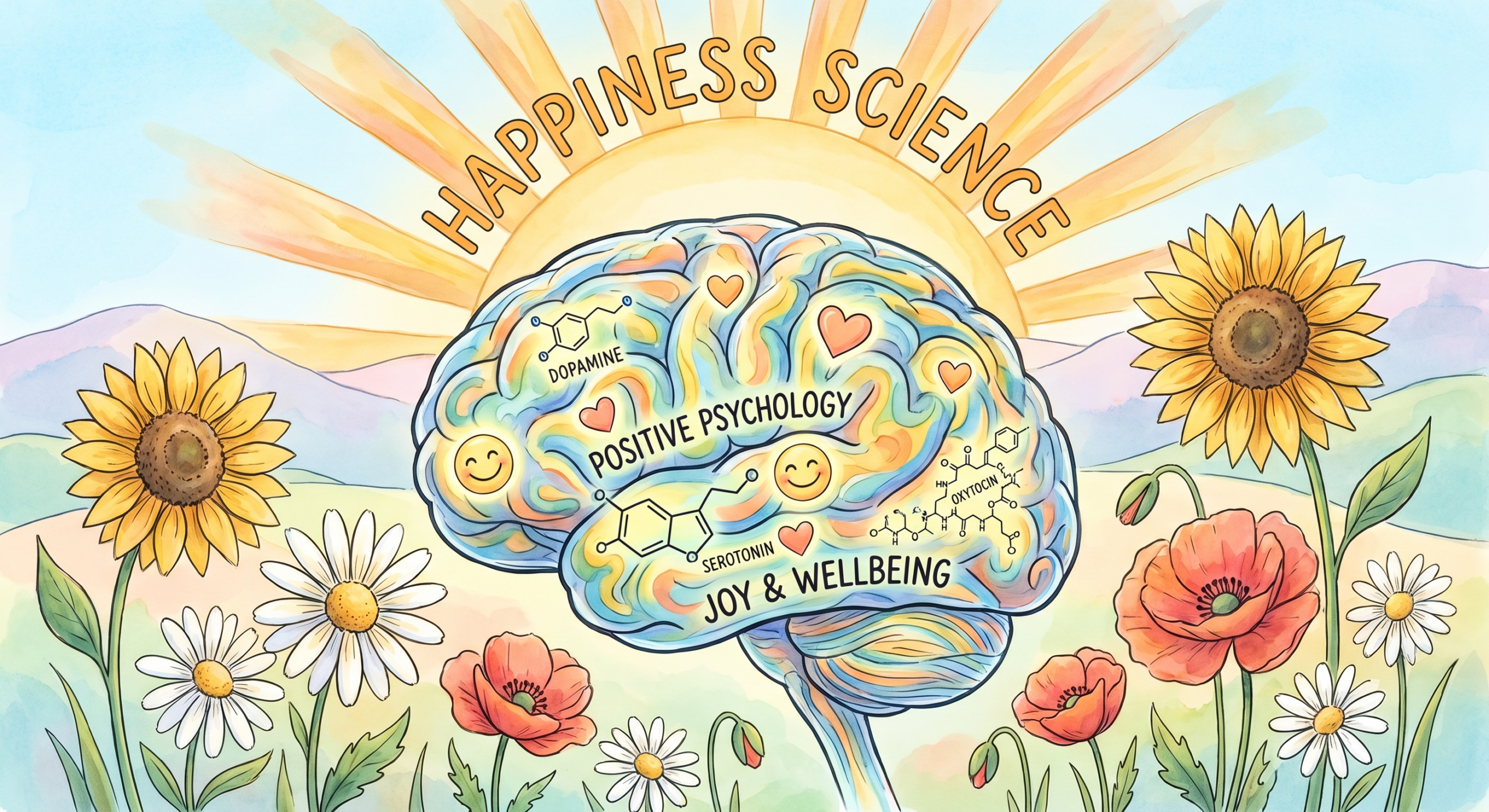
Happiness isn’t just a feeling — it’s a skill. Decades of positive psychology research have identified specific habits, mindsets, and practices that reliably increase subjective wellbeing and life satisfaction. The science of happiness has matured enormously since Martin Seligman and colleagues launched the positive psychology movement in the late 1990s. Today, we have a clearer picture than ever of what actually works — and what doesn’t — when it comes to building lasting happiness.
What Positive Psychology Teaches Us About Happiness
Positive psychology distinguishes itself from traditional psychology by focusing on what makes life worth living, rather than simply treating dysfunction. The foundational insight is that wellbeing can be systematically cultivated — it’s not purely a product of circumstances or genetics.
The Hedonic Treadmill
One of positive psychology’s most important contributions is explaining why we don’t stay happy after positive events — a phenomenon called hedonic adaptation. We return to a baseline happiness level remarkably quickly after raises, promotions, new relationships, and even major life improvements. Understanding this isn’t depressing — it’s liberating. It shifts the focus from chasing outcomes to cultivating daily practices.
PERMA: The Framework for Wellbeing
Seligman’s PERMA model identifies five core elements of wellbeing: Positive Emotions, Engagement, Relationships, Meaning, and Accomplishment. Research shows that people who score high across all five dimensions consistently report higher life satisfaction regardless of their circumstances. This framework is the foundation for most evidence-based happiness interventions.
Habits That Measurably Increase Happiness
The following practices have the strongest empirical support for increasing subjective wellbeing. Unlike most self-help advice, these recommendations are backed by randomized controlled trials.
Gratitude Practice
Writing down three specific things you’re grateful for each day is one of the most replicated findings in positive psychology. The key word is specific — “I’m grateful for the warm coffee I had this morning while the rain hit the window” is more effective than “I’m grateful for my health.” Specificity prevents habituation and forces genuine reflection. Studies show this practice increases wellbeing scores within as little as two weeks.
Acts of Kindness
Doing something kind for others produces a measurable mood boost for the giver — sometimes larger than doing something kind for yourself. The effect is amplified when kindness is conscious and intentional rather than routine obligation. One study found that performing five acts of kindness in a single day produced greater wellbeing gains than spreading the same acts across a week.
Savoring
Savoring is the practice of consciously appreciating positive experiences as they happen — or shortly after. Taking a mental photograph of a beautiful sunset, sharing good news with a friend, or simply pausing to notice a pleasant moment all constitute savoring. Research shows that people who naturally savor have higher wellbeing, and that savoring can be deliberately cultivated.
Social Connection: The Single Biggest Predictor of Happiness
If you could only implement one finding from happiness research, it would be this: invest in relationships. The Harvard Study of Adult Development — the longest study of adult happiness ever conducted — found that relationship quality is the single strongest predictor of wellbeing in later life, outperforming wealth, status, and health behaviors.
Quality vs Quantity
It’s not how many social connections you have but the quality of your closest relationships that matters most. A few deeply trusting relationships consistently predict better outcomes than large social networks filled with superficial connections. If your close relationships are struggling, prioritizing their repair delivers outsized happiness returns.
Combating Loneliness
Loneliness is at epidemic levels in modern societies, particularly in urban environments and among young adults. Its health effects are comparable to smoking 15 cigarettes per day. Combat loneliness proactively — not reactively. Schedule social connection the same way you schedule exercise: as a non-negotiable priority, not something that happens when circumstances allow.
The Mind-Body Connection in Wellbeing
Physical health and psychological wellbeing are deeply intertwined. The happiness-boosting effects of exercise, sleep, and diet are now well-established.
Exercise as an Antidepressant
Multiple meta-analyses show that regular exercise is as effective as antidepressants for mild to moderate depression and anxiety. The minimum effective dose appears to be 30 minutes of moderate aerobic exercise three times per week. The mechanism involves endorphins, BDNF (brain-derived neurotrophic factor), and improved sleep quality — all of which contribute to mood regulation.
Sleep and Emotional Regulation
Sleep deprivation dramatically impairs emotional regulation. After a poor night’s sleep, the amygdala (the brain’s threat-detection center) becomes 60% more reactive to negative stimuli. Consistently getting 7-9 hours of quality sleep is arguably the single highest-leverage health and happiness investment most people can make.
Happiness Practices Comparison
| Practice | Evidence Strength | Time Investment | Effect Size | Best For |
|---|---|---|---|---|
| Gratitude journaling | Very High | 5 min/day | Medium-High | Negative rumination |
| Regular exercise | Very High | 90 min/week min | High | Depression, anxiety |
| Meditation/mindfulness | High | 10-20 min/day | Medium | Stress, reactivity |
| Acts of kindness | High | Variable | Medium | Meaning, connection |
| Social connection | Very High | Variable | Very High | Loneliness, purpose |
| Nature exposure | Medium-High | 20 min/day | Medium | Stress, restoration |
Frequently Asked Questions
Is happiness mostly genetic or can it be changed?
Research suggests that roughly 50% of our happiness baseline is genetic, 10% is due to life circumstances, and 40% is within our voluntary control through intentional activities. This 40% represents significant room for change through deliberate practice — which is precisely what positive psychology interventions target.
How long does it take to see results from happiness practices?
Well-designed gratitude interventions show measurable wellbeing improvements within 2-4 weeks. Exercise benefits emerge within days to weeks. Relationship improvements and meaning-finding take longer. The key is consistency — sporadic practice produces minimal results.
Can money buy happiness?
To a point. Research consistently shows that income increases wellbeing up to roughly $75,000-$100,000/year (adjusted for cost of living), after which the relationship weakens significantly. How you spend money matters more than how much you have — spending on experiences, social activities, and giving to others produces greater happiness than spending on material possessions.
Is it selfish to prioritize my own happiness?
Not at all. Happier people are more productive, more creative, more generous, better partners and parents, and less prone to illness. Investing in your own wellbeing is an investment in your capacity to contribute positively to others. The airline oxygen-mask principle applies: secure your own before helping others.
Does mindfulness actually work?
Yes, with caveats. Mindfulness-based interventions have strong evidence for reducing anxiety and stress reactivity. Effects on positive wellbeing are more modest. The most important factor is consistent practice — even 10 minutes of focused attention training daily produces measurable neural changes over 8 weeks, as shown by neuroimaging studies.
Conclusion
The science of happiness offers something genuinely valuable: evidence-based practices that measurably increase wellbeing. Gratitude, social connection, exercise, sleep, acts of kindness, and meaning-seeking all have robust research support. The trap to avoid is treating happiness as a destination to reach rather than a set of daily practices to maintain. Start with one practice, implement it consistently for 30 days, observe the results, and then add the next. Small, sustainable changes compound into genuinely different lives.


